Title Sequence Clips
My initial impressions of title scenes for films is much different than what it was two weeks ago. Coming from several different genres and artists, all the title scenes presented had one thing in common – creativity. Each title scene is so unique, each truly a work of art. They all share a few common goals, such as introducing the characters, give background information to help you understand the movie a little better through imagery, and grabbing the attention of the viewer to get them interested on what’s going on. How much each title screen focuses on these three vary from case to case.
Most films focus on all three in equal parts. For instance, the movie “Jaws” is a great example of a title scene that gives you a brief introduction to the movie, draws you in, and gives the characters a bit of personality. This is portrayed through imagery in the scene by seeing the “crew” lounging on a beach having a bonfire and partying. This gives the audience a setting and information on who the characters are. It also draws us in when we see one of the girls swim out to see at dusk alone and gets swept under the water by a shark. Another instance where a title sequence put effort into giving you a mix of all three is the title scene of “Apocalypse”. In the scene, they show you images of an island blowing up, helicopters flying around, and a face faded in the background blankly starring off into space, telling us a vet from the Vietnam war is having PTSD and flashbacks. We also see him with drugs and bottles of alcohol, telling us a little more about his personality and mental.

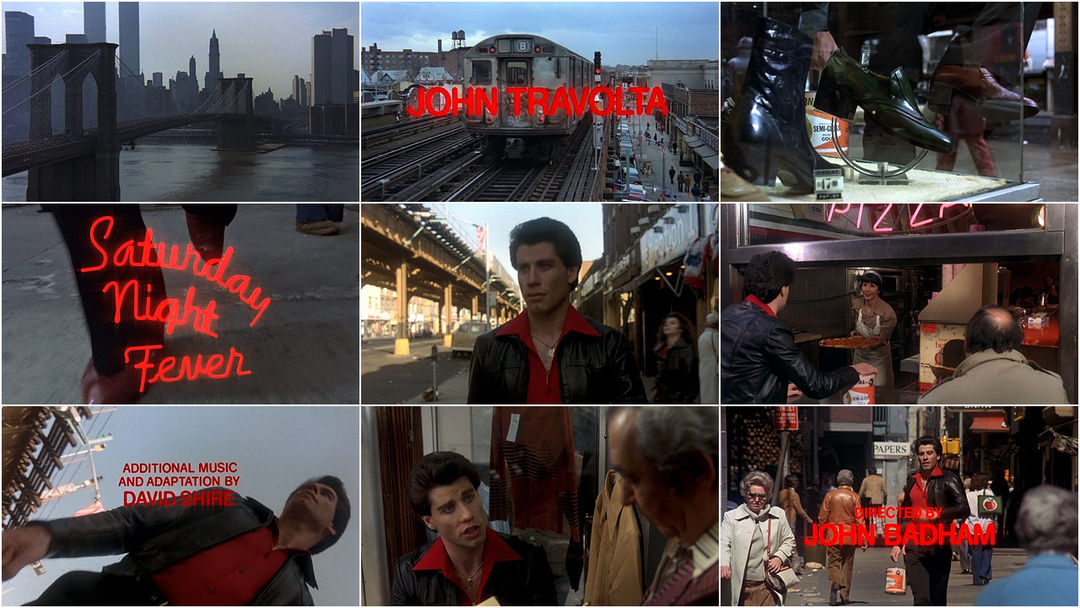
Sometimes, films main goal for the title scene is to develop the mood of the movie. A great example of this would be the title frame for “se7en”, done by Kyle cooper. “In Se7en, Cooper meticulously scratched the celluloid by hand with a needle, adding more edge to already disturbing images of fingerprints being sliced from fingers and type being cut from pages--all set to a pounding Nine Inch Nails track.” (First Frames, Titles in the Digital Realm, Miles Merril) These disturbing images and distinct music give you a feel for how the movie is going to feel. It’s not all disturbing and grungy, though. The title scene for “Saturday Night Fever” is a totally different movie, but it’s artistic choices and style give off a very specific mood that you can expect for the rest of the movie. In Saturday Night Fever, you get a shot of “Tony’s” bright red shoes walking down the streets of New York with the BG’s playing in the background, essentially screaming the 70’s. From the classic accent to the bite of pizza he grabbed and the way he walks and talks, the developers of this movie really wanted that 70’s vibe to it and wanted you to know that Tony really loves himself.
In other instances, films use special effects or images to trick your brain or give off an effect on the viewer. For instance, in the James Bond movie “Gold Finger”, we get the classic shot of Bond looking at the camera through the barrel of a gun, almost giving a spotlight effect on Bond. Nother example is the colorful title scene of Dirty Deeds by David Caeser, “The resulting titles reveal the narrative in wild split screens and wipes of pokie machines being sledge-hammered, and credits appear on rolling one-arm bandit slots.” (First Frames, Titles in the Digital Realm, Miles Merril)
A more out of the ordinary example is when films use the title scene to introduce the characters and not tell you much about what's going on in the film. An example of this is in Pulp fiction, where all we get is an off-putting conversation in a diner talking about illegal activities in a way too excited turn, followed by them pulling out their guns and robbing the diner. This scene gives us a lot of context on the character’s personalities and what kind of people they are, but little about what the movie’s about and what we should expect next. Another example of this is Train Spotters. This one helps you infer a little more what the movie might be about but is more focused on showing you the characters and grabbing our attention. We see a group of boys running through the street away from someone else with a voice over of someone talking and a montage of the boys in action living their everyday lives, showing us their etiquette and personalities.
Overall, studying title scenes has shown me that a lot of artistic creativity goes into even a short two-minute piece, a lot more than I originally gave them credit for. I’ve always loved film, writing, art and music, so I think choosing the film for my portfolio would be a very challenging but fun experience. I was leaning towards film to begin with, but this experience has helped me solidify it.


Comments
Post a Comment